If you are a distributor in the promotional products, corporate swag, or custom merch industry, you already know one thing: the back-end of this business is pure chaos.
On one side, you are chasing clients for design approvals; on the other, you are scrambling to check live supplier pricing. When searching for software to solve this friction, you will quickly find that most order management systems for distributors look great on a sales demo, but fall apart the second a complex, multi-line promo order hits the queue.
To give you the real truth, we dug deep into real communities where professionals share their experiences and analyzed actual user demos. Here is a straightforward 1v1 comparison of these promotional products tools so you can save your time and hard-earned money.
Must Read: Commonsku Alternative – Custom Solution for Promotional Distributors
How to Sync SAGE, ASI, and CommonSKU Feeds with Shopify’s Product Matrix
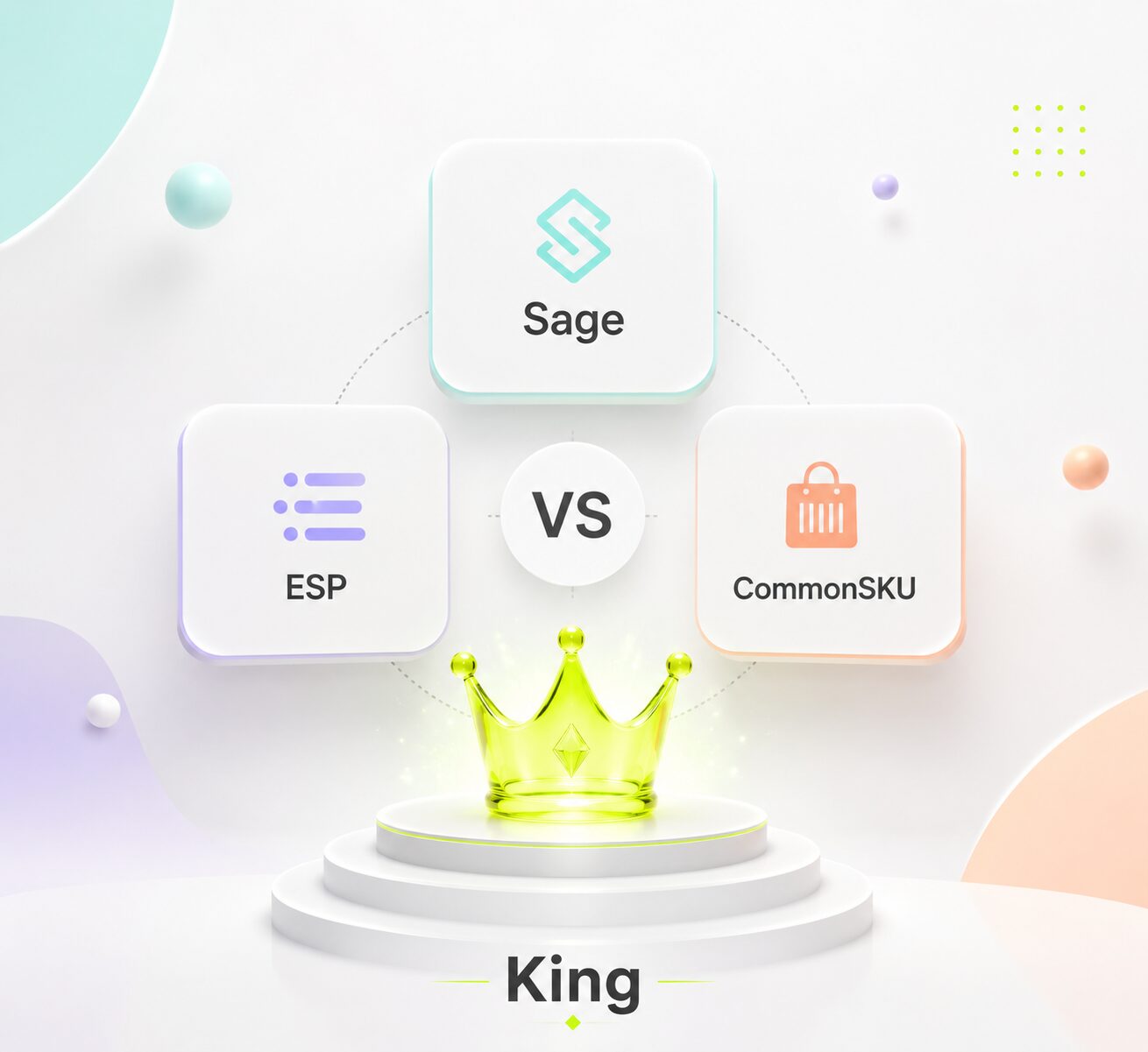
Matchup 1: SAGE vs ESP (The Ultimate Sourcing War)
These two are the oldest giants in the industry. Think of them as the “Google + Yellow Pages” of the promotional products world. Their main battle is over who wears the crown for the best product sourcing tools.
1. Sourcing Database and Target User
According to real users, SAGE is a massive favorite for distributors based on the US West Coast. Its database operates like a giant, structured library. If your client frequently asks for retail, name-brand items, SAGE provides the most accurate and reliable supplier data.
ESP (ASI) is the undisputed king of the East Coast. The industry operates on an unwritten rule: if you don’t have a unique asi esp number, suppliers might view your business as unverified or sketchy. For pure directory size, its network is unmatched.
2. Interface and Client Presentations
SAGE runs incredibly well on Windows, but Mac users regularly complain on forums. One user noted: “Due to major software compatibility issues, running SAGE natively on a Mac is an absolute nightmare.” While it lets you build quick product presentations, the interface looks like it hasn’t been updated in over a decade.
ESP’s search engine is fantastic for building product bundles and multi-item kits. However, when it comes to the built-in asi esp orders workflow tool, the interface feels incredibly clunky and data-heavy. It feels less like modern software and more like an old corporate database.
3. Accounting and Analytics
This is where both systems fall flat. SAGE and ESP can generate basic invoices, but their advanced analytics and automated accounting integrations are virtually non-existent.
Because data doesn’t flow smoothly between these tools, it naturally breeds manual tracking errors as details get dropped or miscopied between your quoting tool and your order sheet.
Matchup 2: SAGE vs CommonSKU (The Old School Library vs The Modern Pipeline)
Moving from a traditional directory to a modern system changes your entire business dynamic, shifting your daily focus from raw sourcing data to highly automated visual pipelines.
1. Sourcing vs Workflow Automation
At its core, SAGE is primarily a product searching tool. You find the item, and the software’s job is done. The rest of your order process relies on manual paperwork.
CommonSKU: This platform was built specifically to solve SAGE’s old-school limitations. It isn’t just a search tool; it is arguably the best order management software for promotional products. The moment you import a product, it automatically generates a Purchase Order (PO) and drops the project into a visual pipeline that works exactly like digital sticky notes (Trello style).
2. Client Experience and Presentations
- SAGE: Presentations generated here are standard, old-fashioned PDFs that you have to download and attach to an email, which often leaves you waiting days for a reply.
- CommonSKU: This tool creates interactive web links called “Smart Presentations.” Your client clicks the link, views the branded merch options, and clicks “Approve” right on their screen. This completely eliminates back-and-forth email tax.
3. The Hidden Traps and Pricing Reality
- SAGE: Incredibly affordable. It usually costs around $50 to $70 per user, making it very friendly for small operations.
- CommonSKU: Look past the slick interface and check the actual operating reality, because CommonSKU is exceptionally expensive. There is a massive amount of discussion online regarding commonsku pricing for solopreneurs. If you’re on their $119/user/month Essentials tier, you’re locked out of crucial client portals and advanced workflow automations. To actually streamline your backend without hitting a wall, you’re forced into the $159/user/month Advanced plan—and those seat costs compound fast because they enforce a strict commonsku minimum users limit where you must buy at least 2 to 3 licenses depending on the tier.
Matchup 3: ESP vs CommonSKU (The Corporate Giant vs The Creative Agency Tool)
When choosing between an old giant and a modern tool, it helps to look at how different modern Order Management Systems for distributors handle complex back-office data.
1. CRM, Analytics, and Reporting
- ESP: The built-in CRM is highly static and basic. It provides reports, but they come in dry, spreadsheet-heavy accounting formats. Because communication isn’t centralized, it creates completely siloed client communication, where sales reps are constantly texting production just to see if an order shipped while the client is left completely in the dark.
- CommonSKU: Widely loved as the best crm for promotional product industry because it features a visual Sales Dashboard that tracks live goals and an internal social feed where team members can tag each other inside active orders.
2. Accounting and Invoicing Integration
- ESP: You can create standard invoices, but the automated integration ends there.
- CommonSKU: It offers a beautiful, seamless integration. With one click, your billing data completely syncs with QuickBooks Online or Xero, wiping out data entry.
3. The Structural Bottlenecks
The major frustration shared by the community is that platform differences often lead to unexpected workflow bottlenecks. CommonSKU’s internal product directory is significantly smaller than its older competitors. Because of this, to run CommonSKU effectively, you almost always need to keep a separate, paid subscription to ESP or SAGE just to pull product data. As a distributor, you end up paying for two systems at once.
Quick Comparison Grid: Which is the best Order Management Systems for distributors
| Feature | SAGE | ESP (ASI) | CommonSKU |
| Primary Strength | Deep Product Sourcing | Industry Verification & Directory | Order Workflow & Client Experience |
| Interface Style | Traditional (Mac Compatibility Issues) | Heavy, Clunky ERP Layout | Clean, Modern & Highly Visual |
| Accounting | Manual Data Export | Basic Document Forms | Automated QuickBooks/Xero Sync |
| Pricing Setup | Budget-Friendly Per User | Mid-to-High Range | Expensive (Strict Minimum User Caps) |
The Promotional Product Industry Hack (The Hybrid Setup)
The most common strategy used by modern promotion product distributors is simple. They buy a basic subscription to SAGE or ESP strictly to use as a database, and then link it directly to CommonSKU or custom software to run their entire everyday workflow.
The Final Verdict: Which One Should You Buy?
In a nutshell, If you are a solopreneur, stick with SAGE or ESP and do not jump straight into CommonSKU, because their mandatory user pricing rules will drain your early profits. Source your items on the older platforms and handle your invoicing through standard software.
But if you have a Team of 2 or more Users, CommonSKU is an absolute game-changer. It will cut your daily administrative work in half and dramatically speed up your order processing.
Ultimately, finding the right platform comes down to your current budget, your team size, and how much administrative overhead you are willing to tolerate. While there are a few commonsku alternatives like Antera Advance or InkSoft out there, testing how different Order Management Systems for distributors line up against your specific daily workflow is the only foolproof way to find your perfect match.
FAQs
What are the best order management systems for distributors?
The most common order management systems for promotional product distributors are SAGE, ESP, and CommonSKU. SAGE and ESP are strong for product sourcing and supplier data, while CommonSKU is stronger for workflow automation, client presentations, purchase orders, and order tracking.
Is SAGE or ESP better for product sourcing?
SAGE and ESP are both strong product sourcing tools. SAGE is often preferred for structured supplier data and reliable product information, while ESP is known for its large ASI supplier directory and industry verification. The better choice depends on your supplier network, location, and workflow needs.
Is CommonSKU better than SAGE or ESP for order management?
CommonSKU is usually better for managing the full promotional products workflow because it includes visual pipelines, smart presentations, purchase order creation, CRM features, and accounting integrations. However, its product sourcing database may not replace SAGE or ESP completely.
Should solopreneurs use CommonSKU?
For solopreneurs, CommonSKU can be expensive because of its pricing structure and user requirements. A smaller distributor may be better off using SAGE or ESP for sourcing and handling invoicing, tracking, and client communication with simpler tools until the business grows.
Why do distributors use a hybrid setup with SAGE, ESP, and CommonSKU?
Many promotional product distributors use SAGE or ESP as their product sourcing database and CommonSKU or custom software to manage their daily workflow. This hybrid setup gives them access to strong supplier data while still keeping quotes, presentations, orders, and accounting more organized.
Which order management system is best for a team of two or more users?
For a team of two or more users, CommonSKU can be a strong choice because it helps reduce manual admin work, improves order visibility, creates better client presentations, and supports a more centralized workflow. The final decision should depend on budget, team size, sourcing needs, and daily operational complexity.